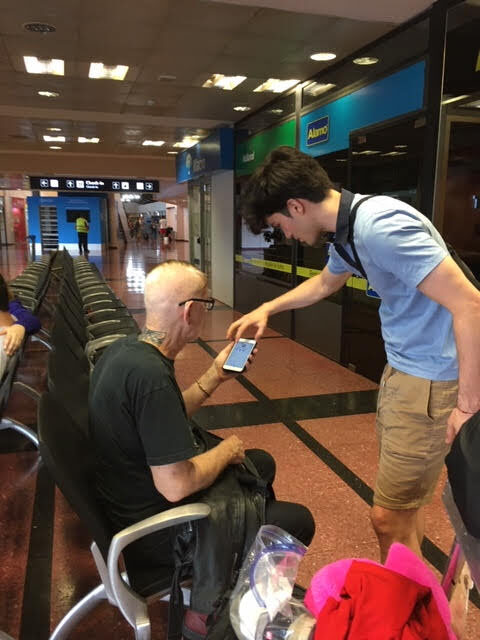
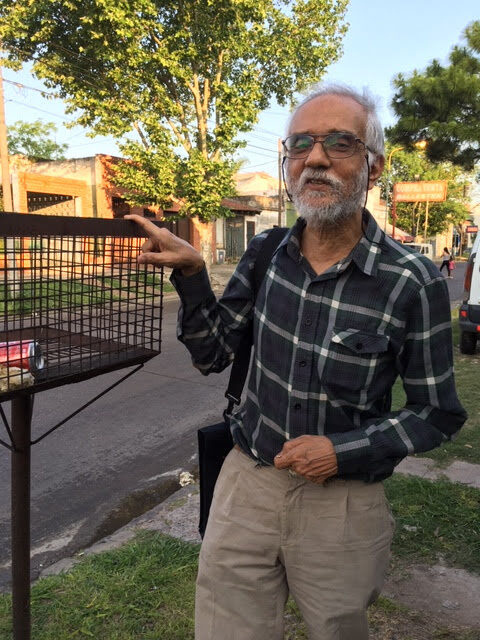
Gautam and Pelusa
Gautam and I met when we were grad students at Princeton. He's an environmental engineer. After school, he left for Upper Volta with folding mylar mirrors to boil water. Then the Philipines, and maybe some other stuff. In Mexico, he met his current wife, Pelusa (shaggy hair). They now live in Buenos Aires. For me, the purpose of the trip was to catch up.

I also brought along retired artist friend Sharon Roslund. She'd collected 14 suitcases of clothes to give to the poor. She'd made contacts in the Buenos Aires Self Realization Fellowship group, and they would do the distribution.
When I heard 14 suitcases, I said it was folly and ungraciously washed my hands of it. Sharon did all the logistics for getting them from here to there, and it worked like a charm.
Here she is at an art museum, getting a headwrap from a gracious headwrapped Frenchwoman.


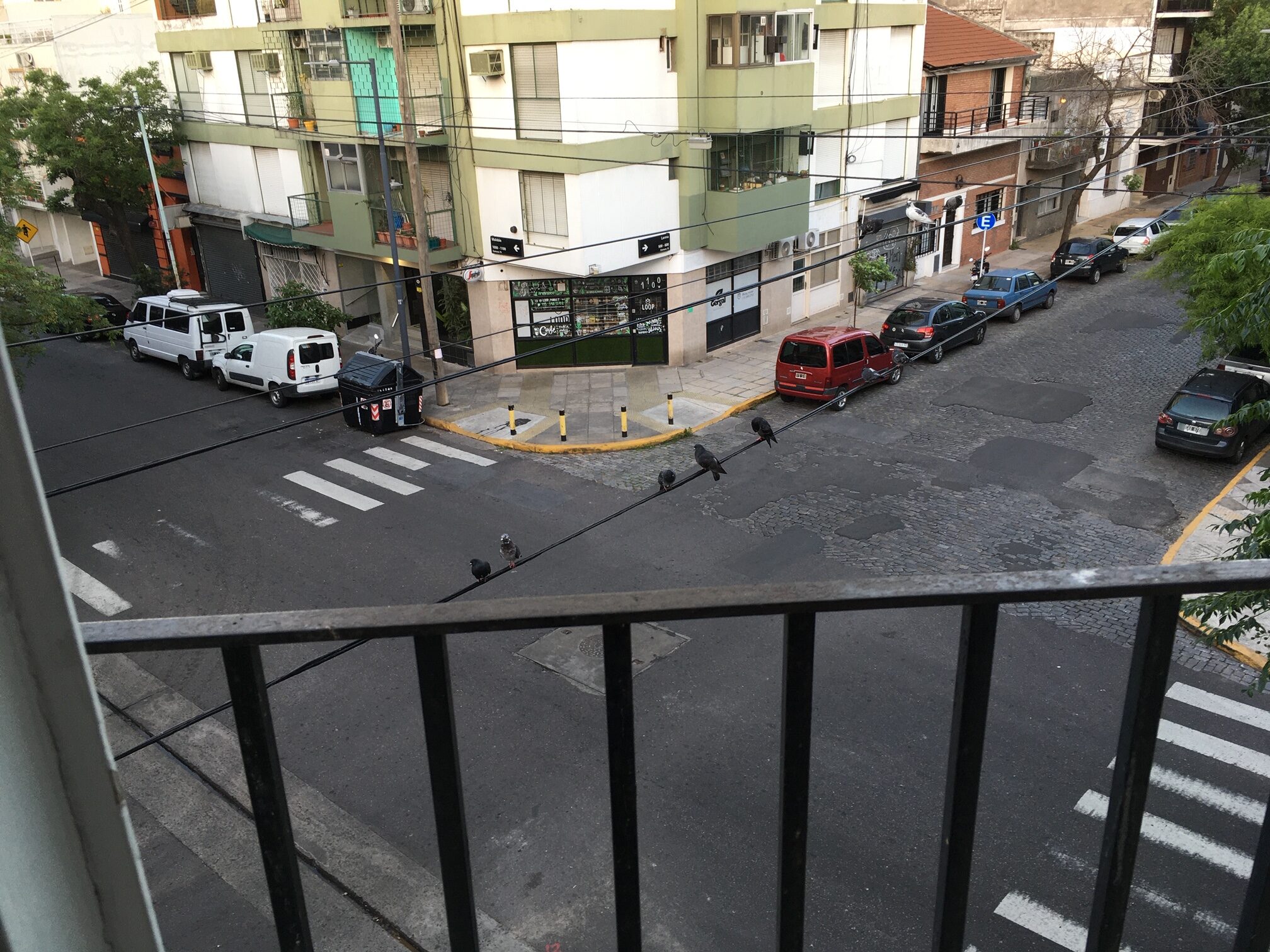
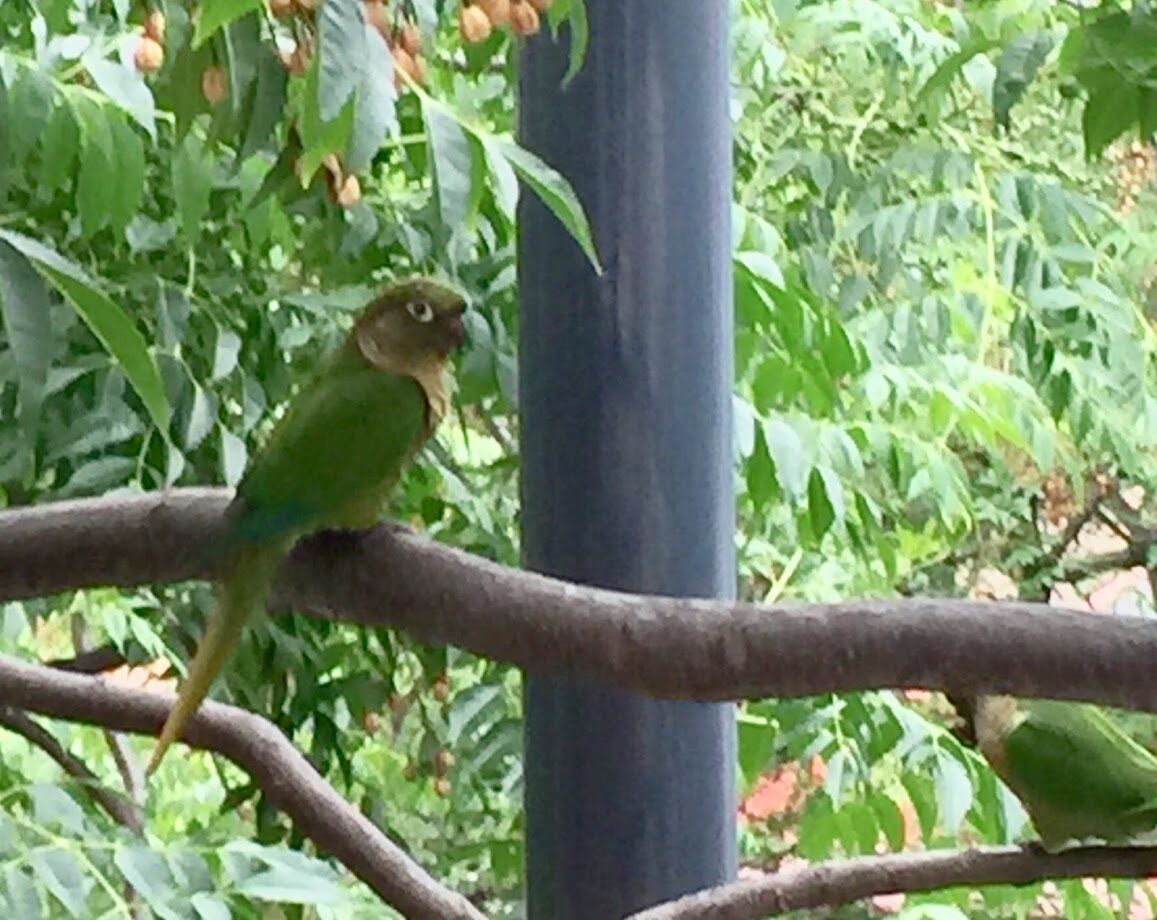
We stayed in a vacant apartment that Gautam had bought during a previous currency crisis. It was in Villa Crespo, where the funky meets the hip. The parrot outside the windows was an unexpected plus.
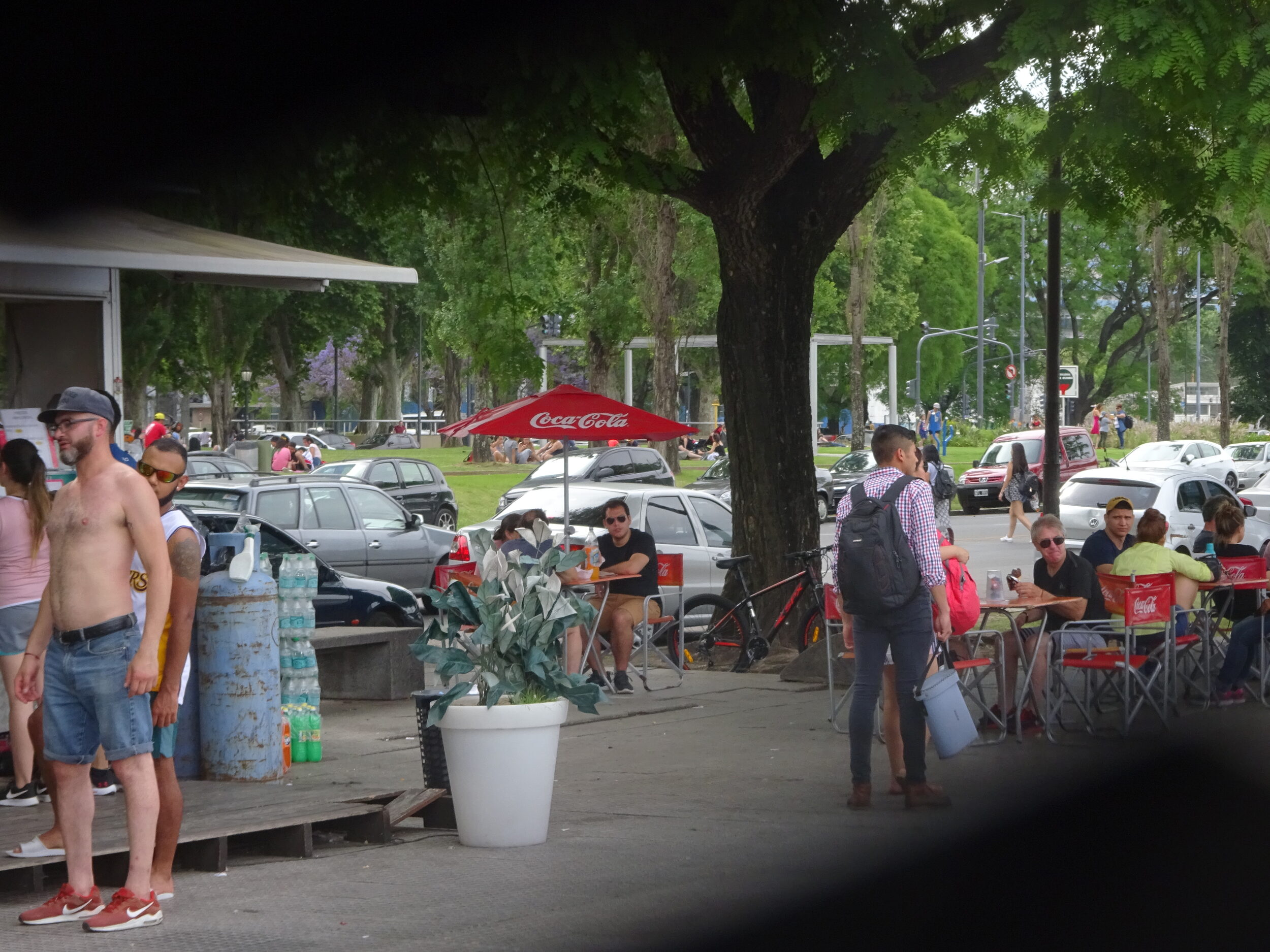
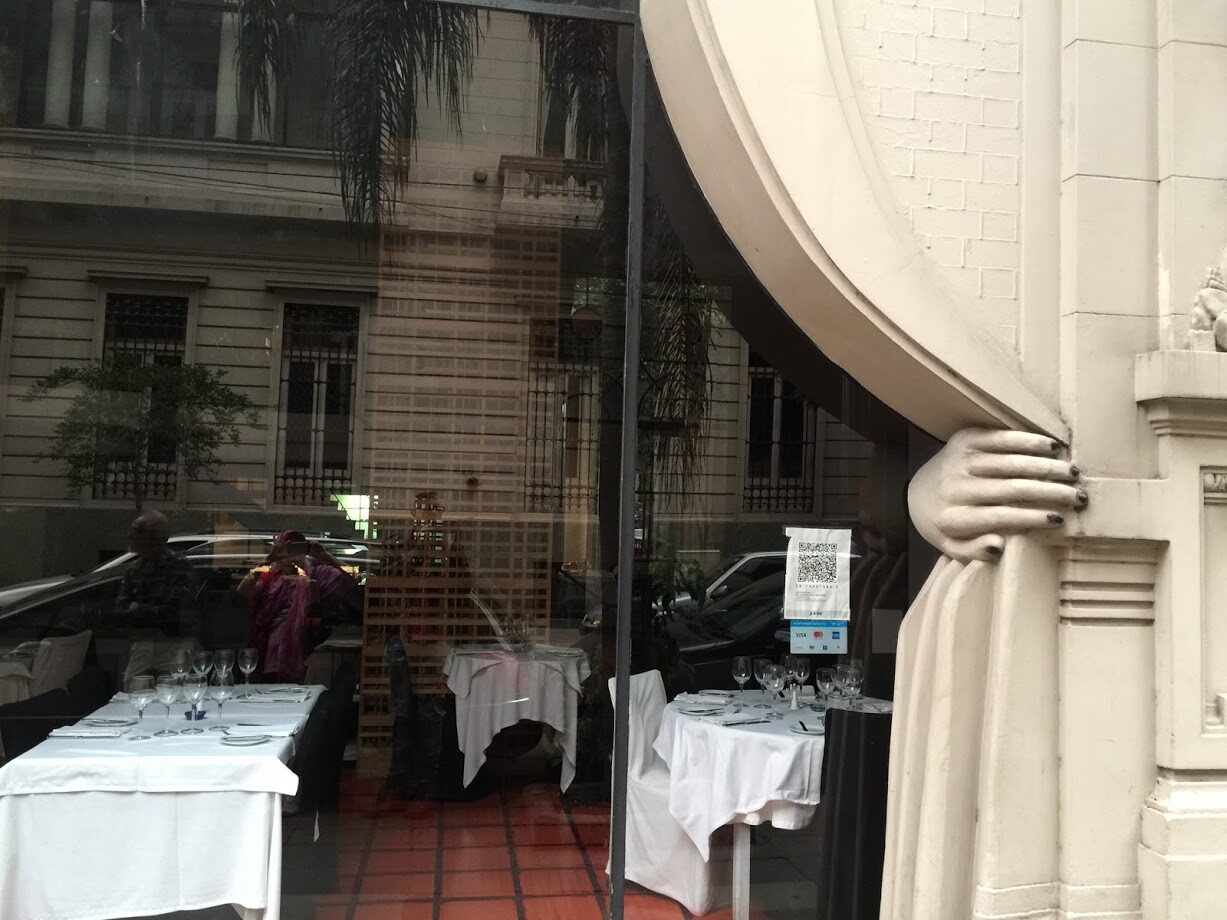
These are the estuary park where Gautam, Pelusa and I spent the afternoon catching up, and a cool pre-theater restaurant.
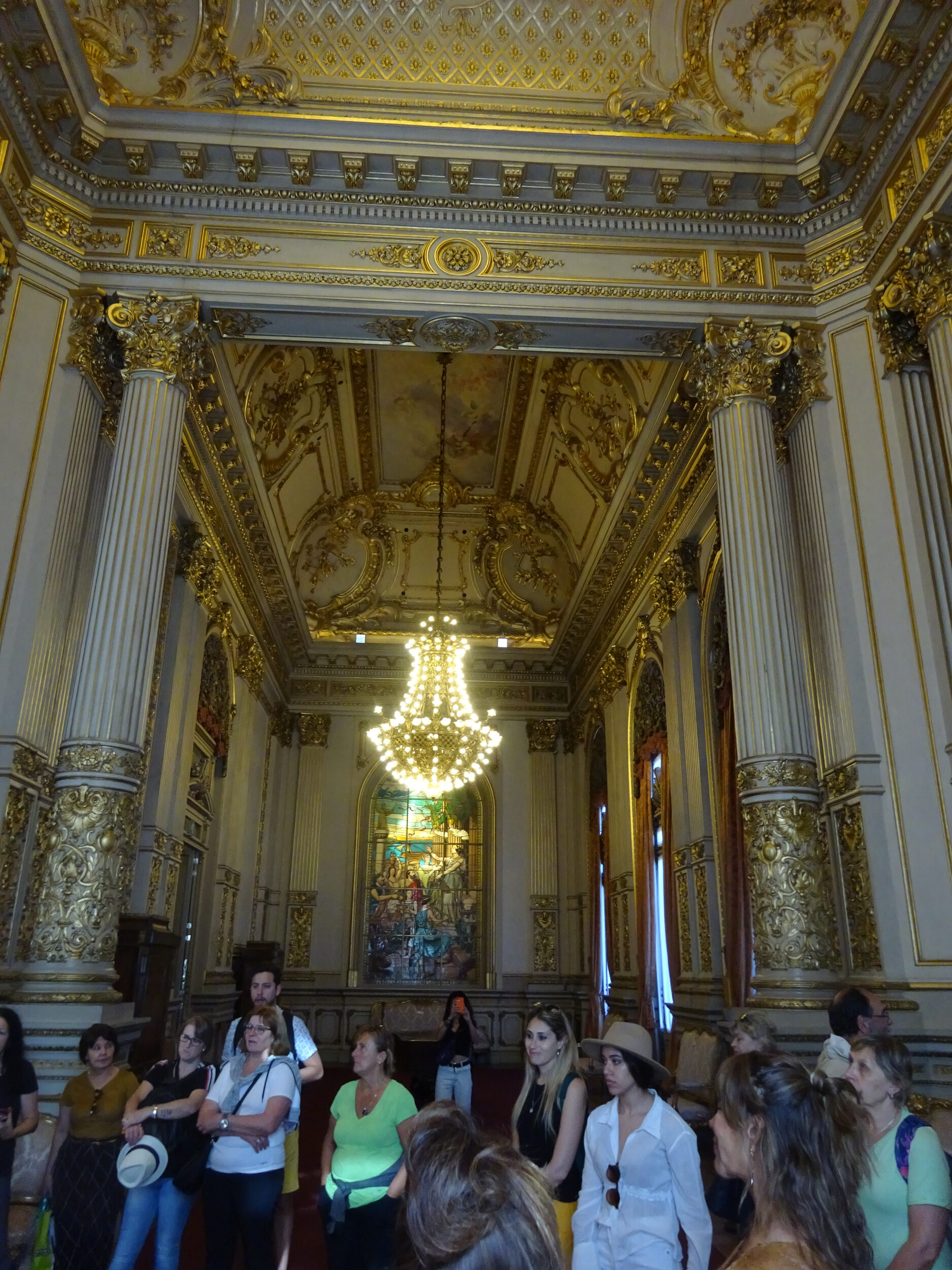
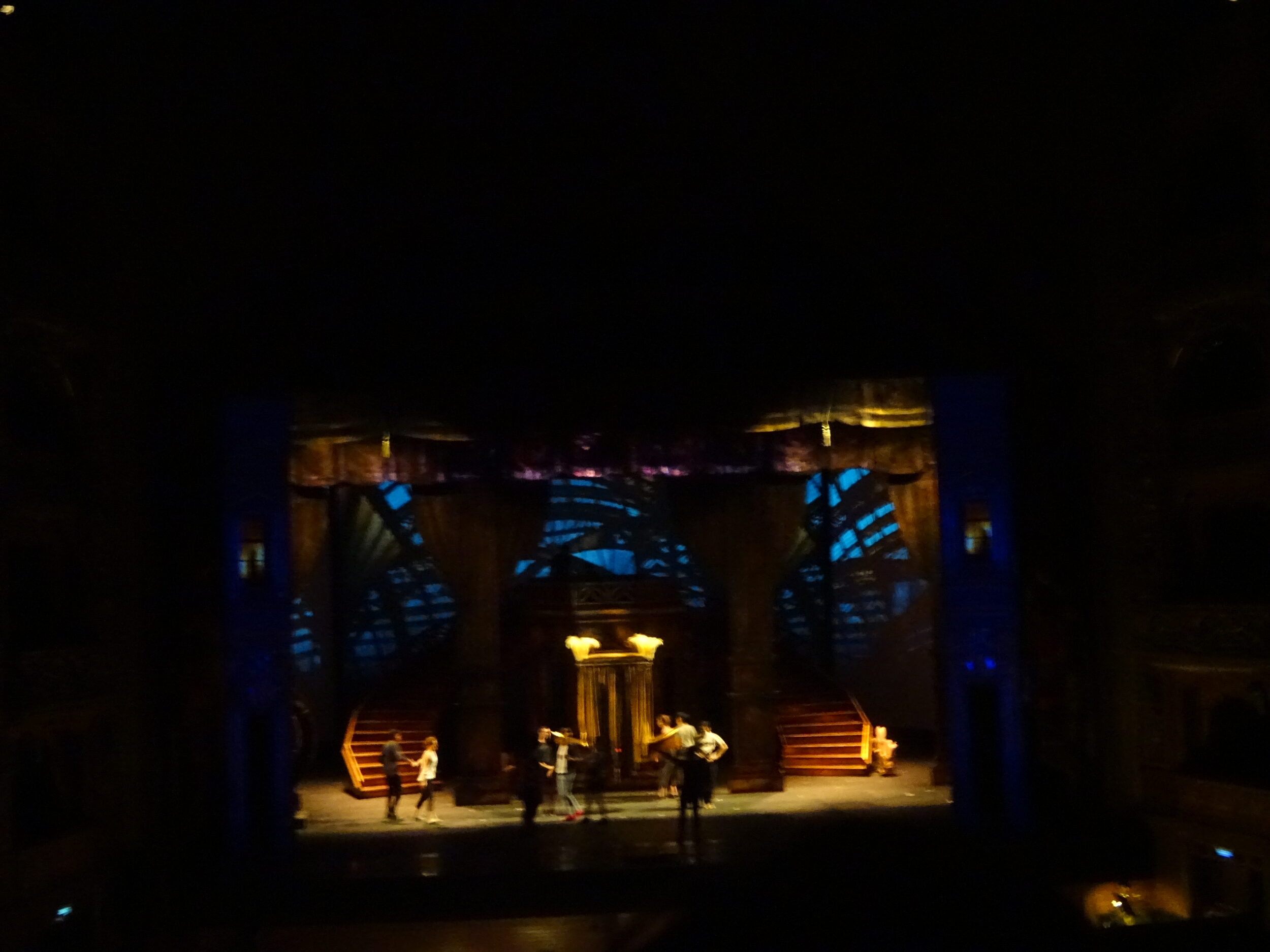
We toured the opera house where they were rehearsing Tales of Hoffman. They were rehearsing the extras, who moved about but had no lines.
Sharon and I flew up to Salta in the foothills of the
Andes, with Cristobal as a tour guide. Cristobal was an
interesting guy. While modeling, he'd completed to BAs
and was working on his third in civil engineering.
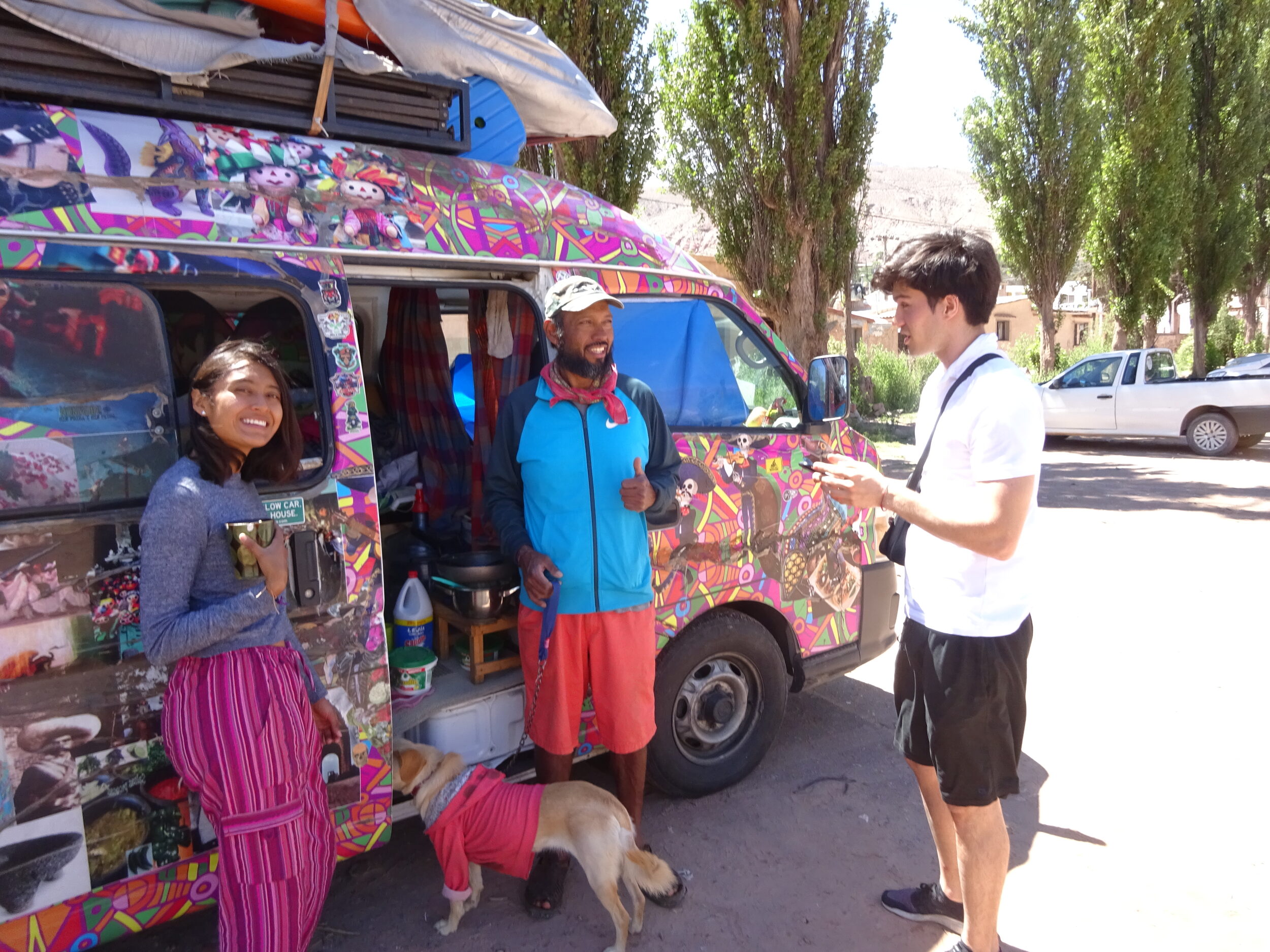
When we drove by this crew, Sharon had Cristobal hang a U
and got out to talk to them. I talk to no one; it's
embarrassing. Sharon talks to everyone, which stresses me
out, but at times enriches my life.

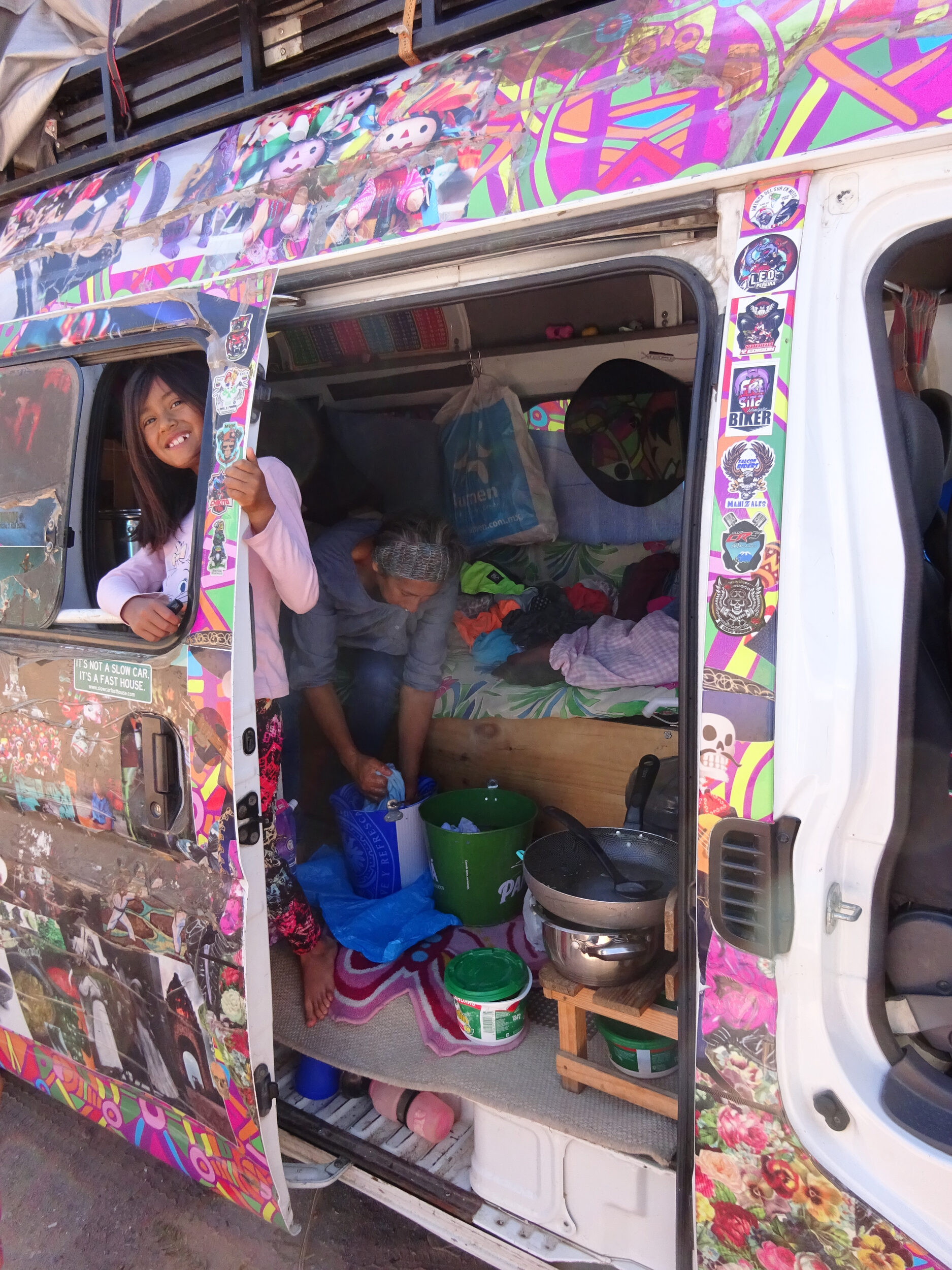
With all their belongings in the van, they were half
way though a trip from Mexico to Tierra del Fuego,
promoting peace and borderlesness along the way. They had
just come from Bolivia where "the people are friendly
but the cops and soldiers will kill you". The crew was
guy, wife, daughter, dog. You can see his wife doing the
wash in a tiny bucket inside the van amid whatever
belongings didn't fit in the back or on the roof.
The guy was a lawyer taking some time off.
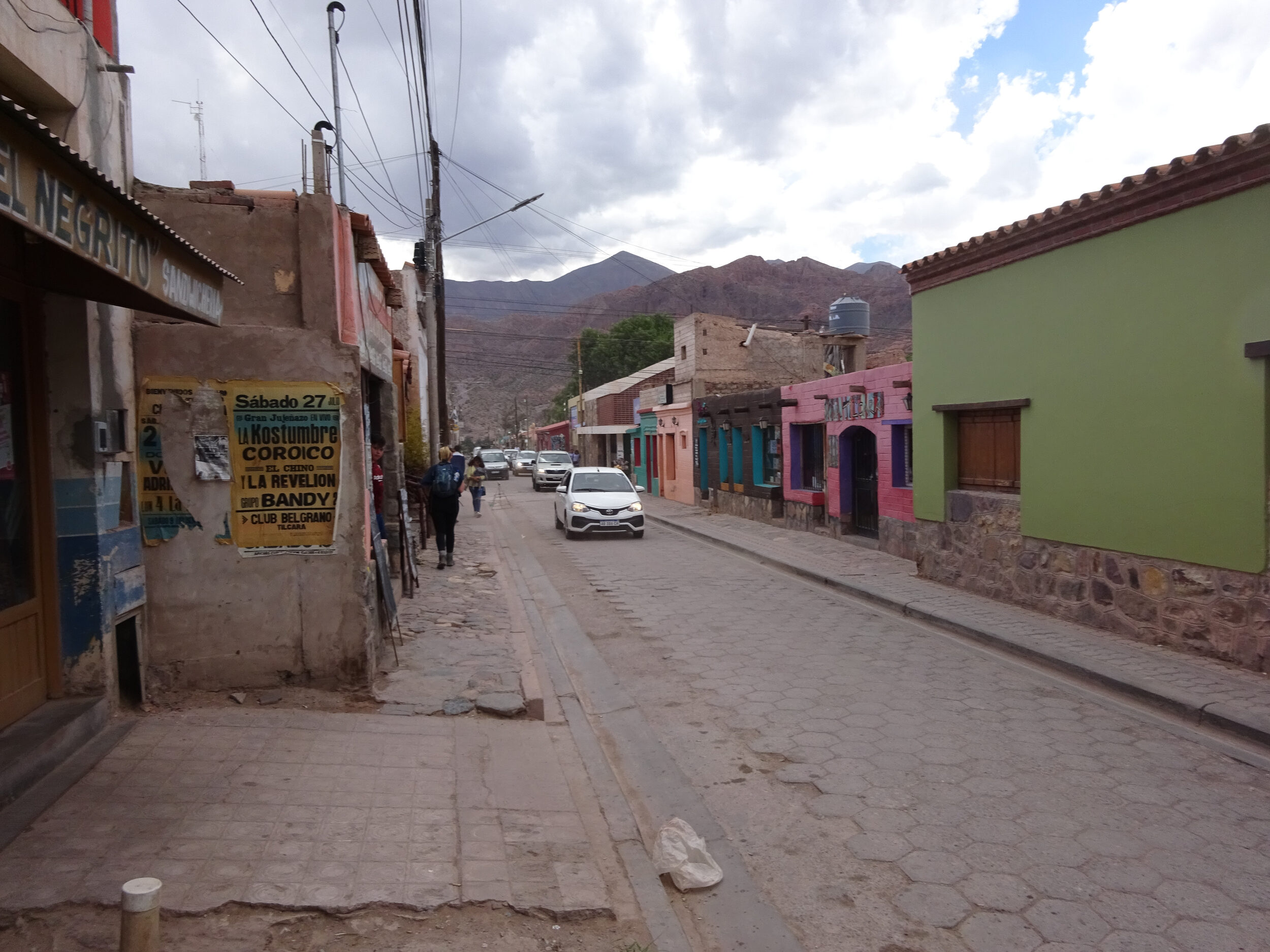
Old Town Salta
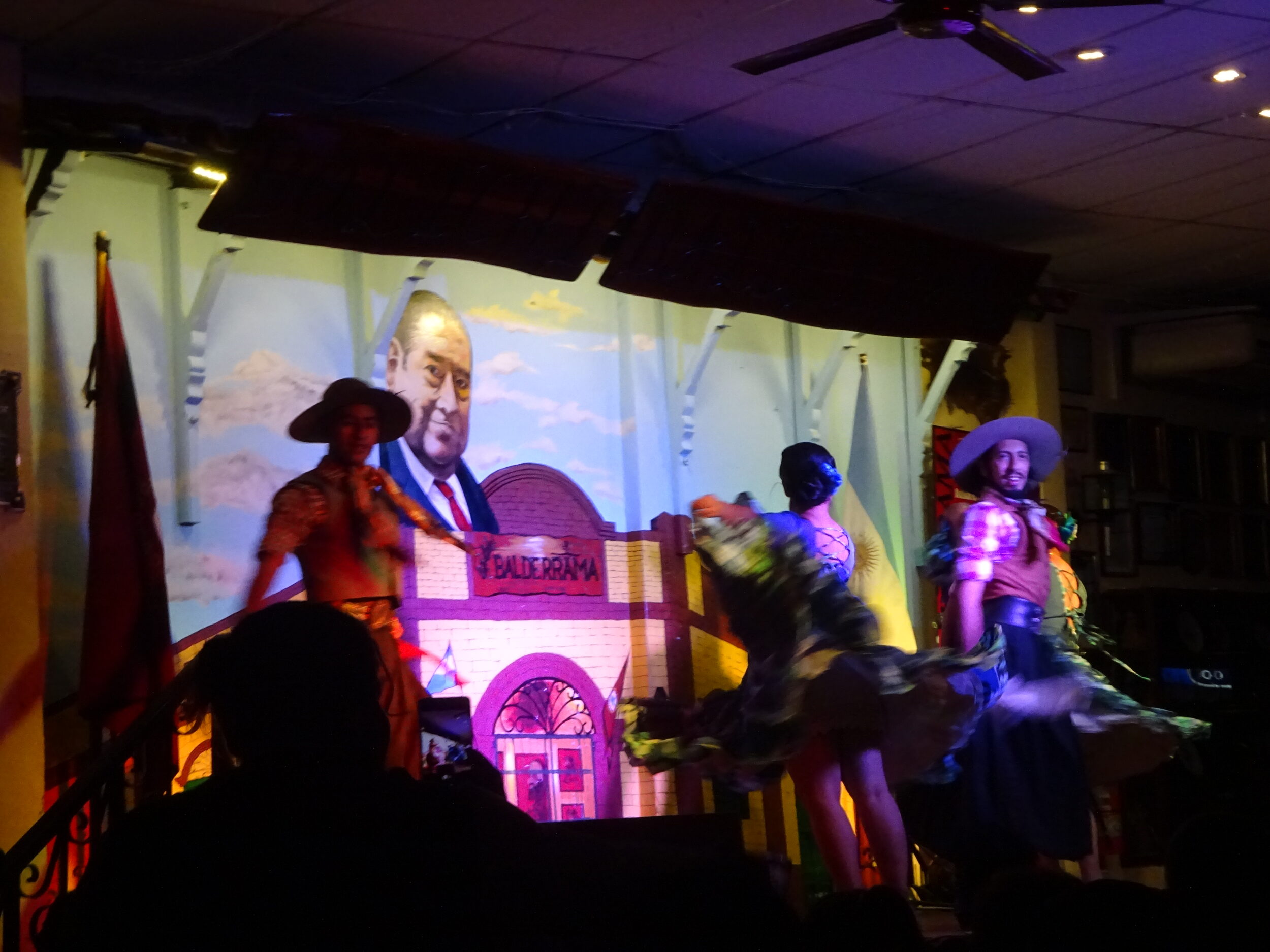
Cristobal wanted to see a show, so we saw this one in a banquet hall style restaurant. The beaming picture in the background is the restaurant's owner.
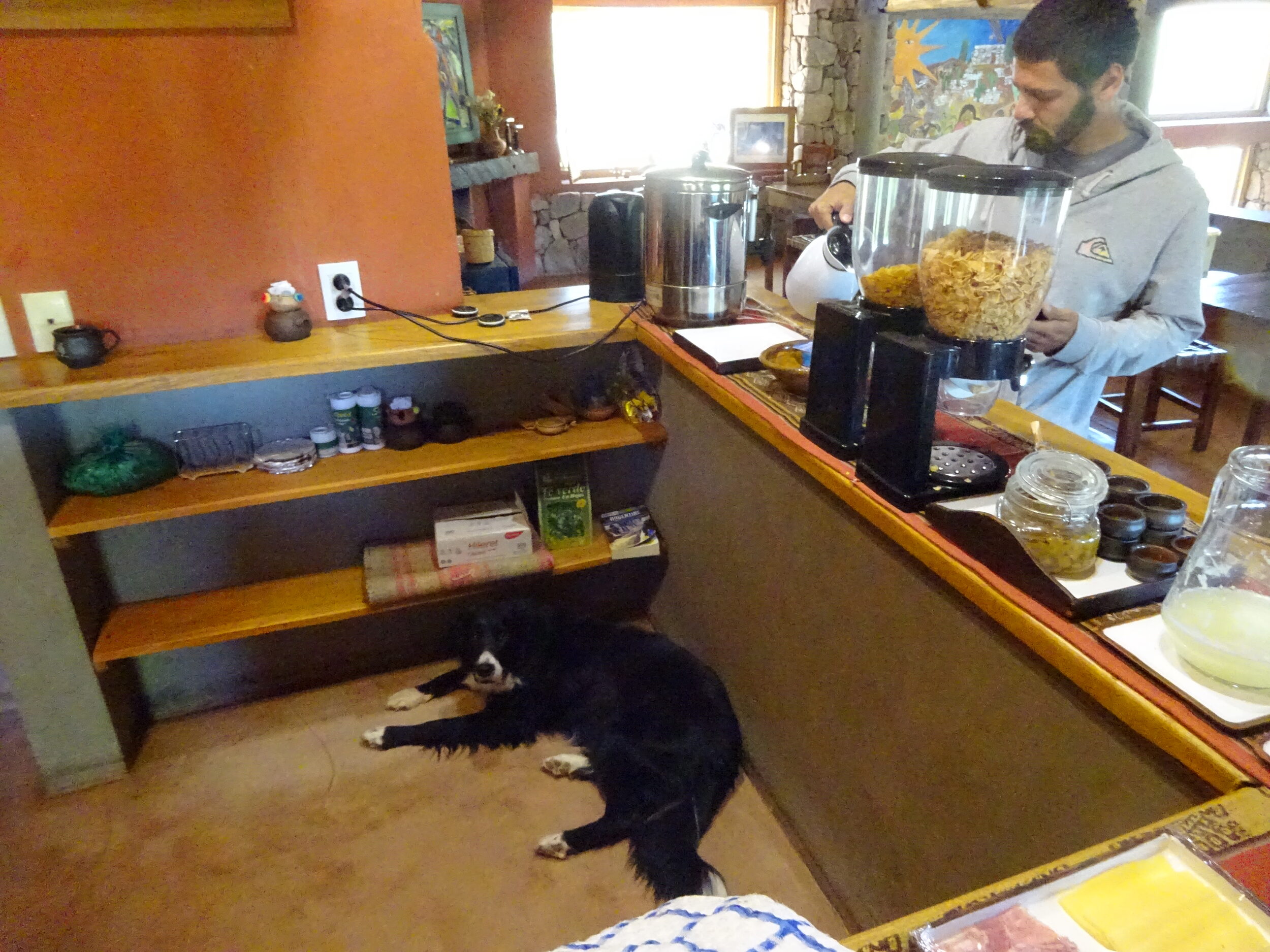
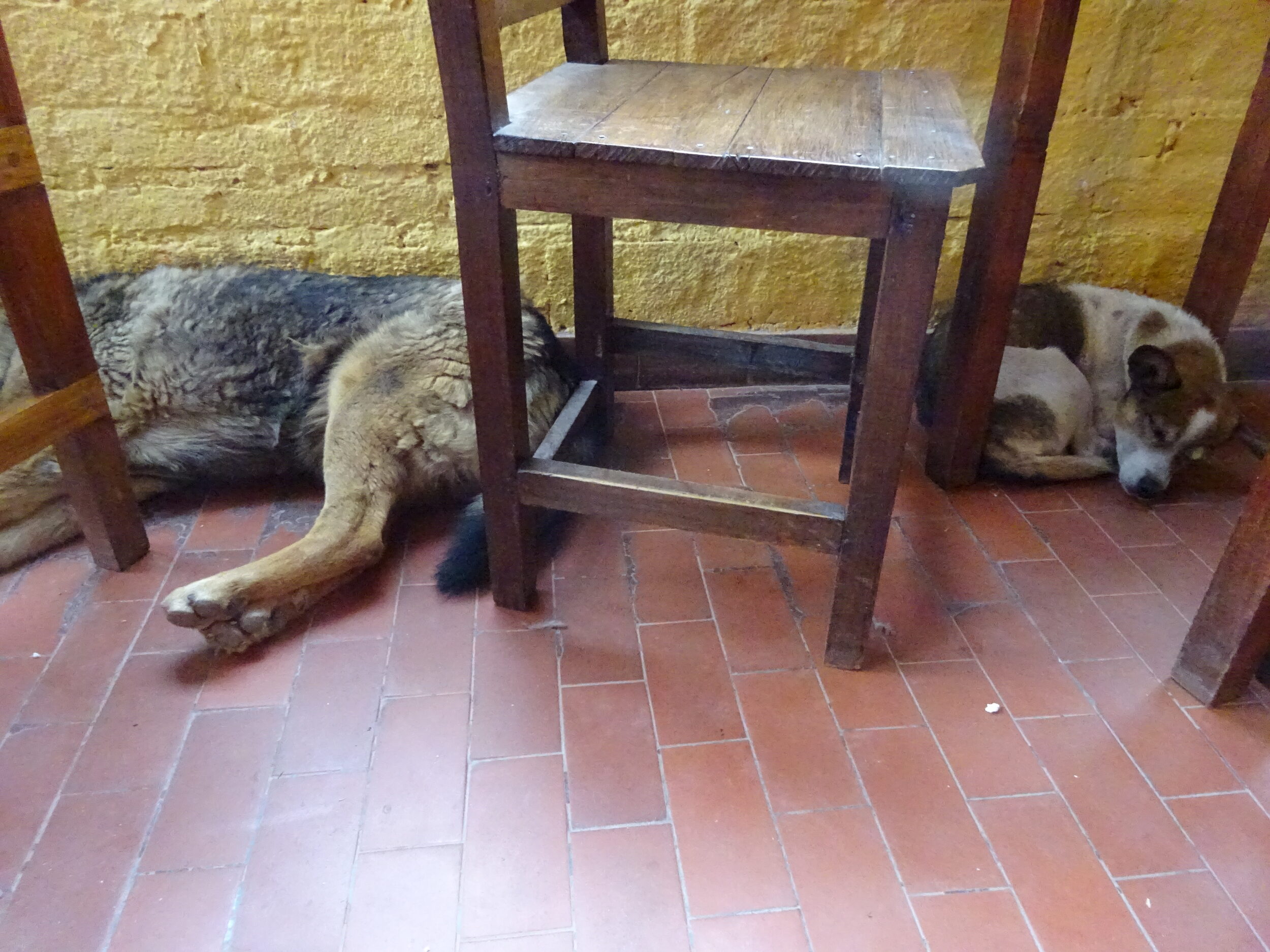
The dog density is less than India, but there are always dogs on the street roaming around looking for a handout. Some are pets, some are feral. There is a law that every cafe must have at least one dog. Here are some examples.
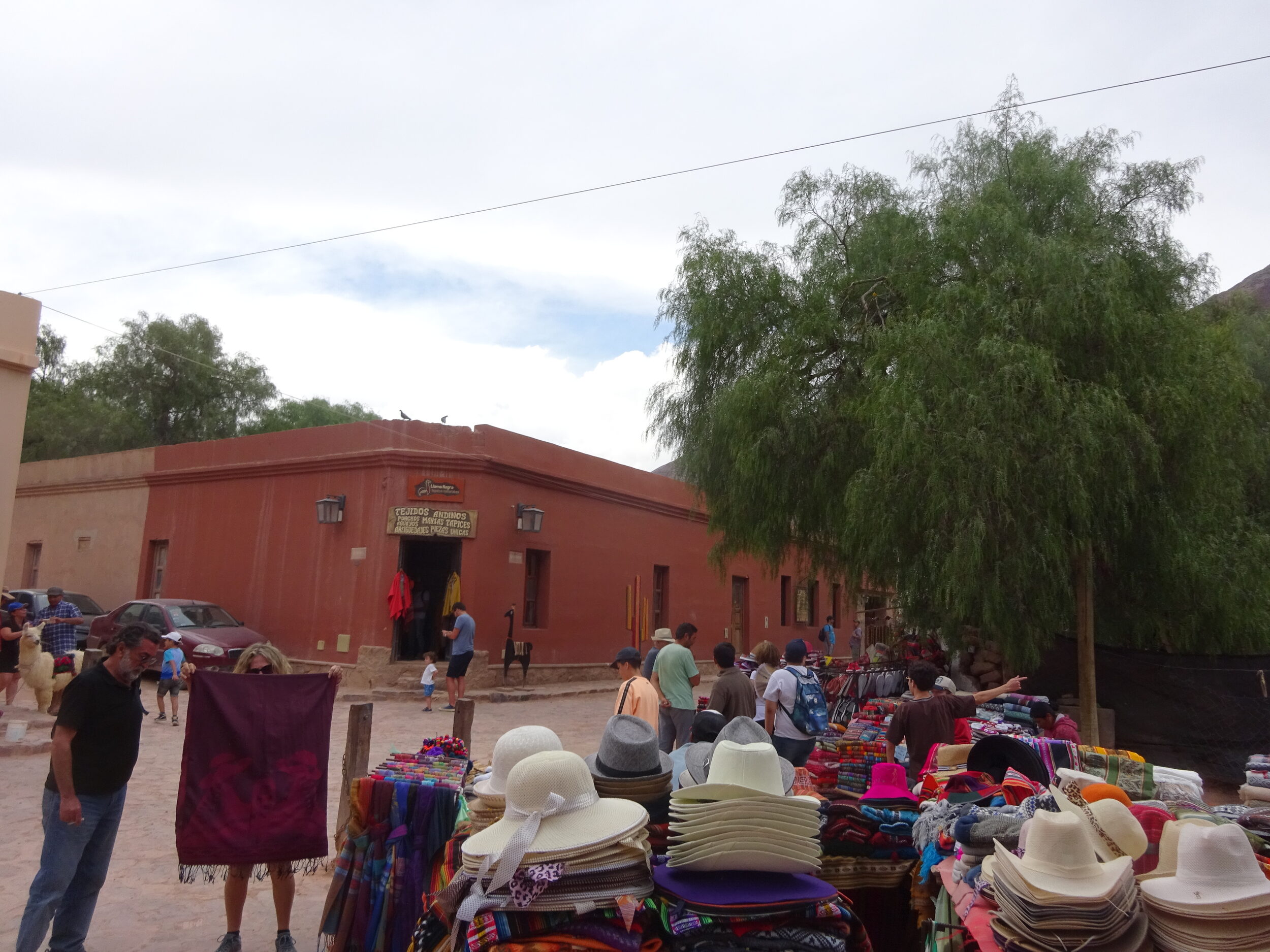
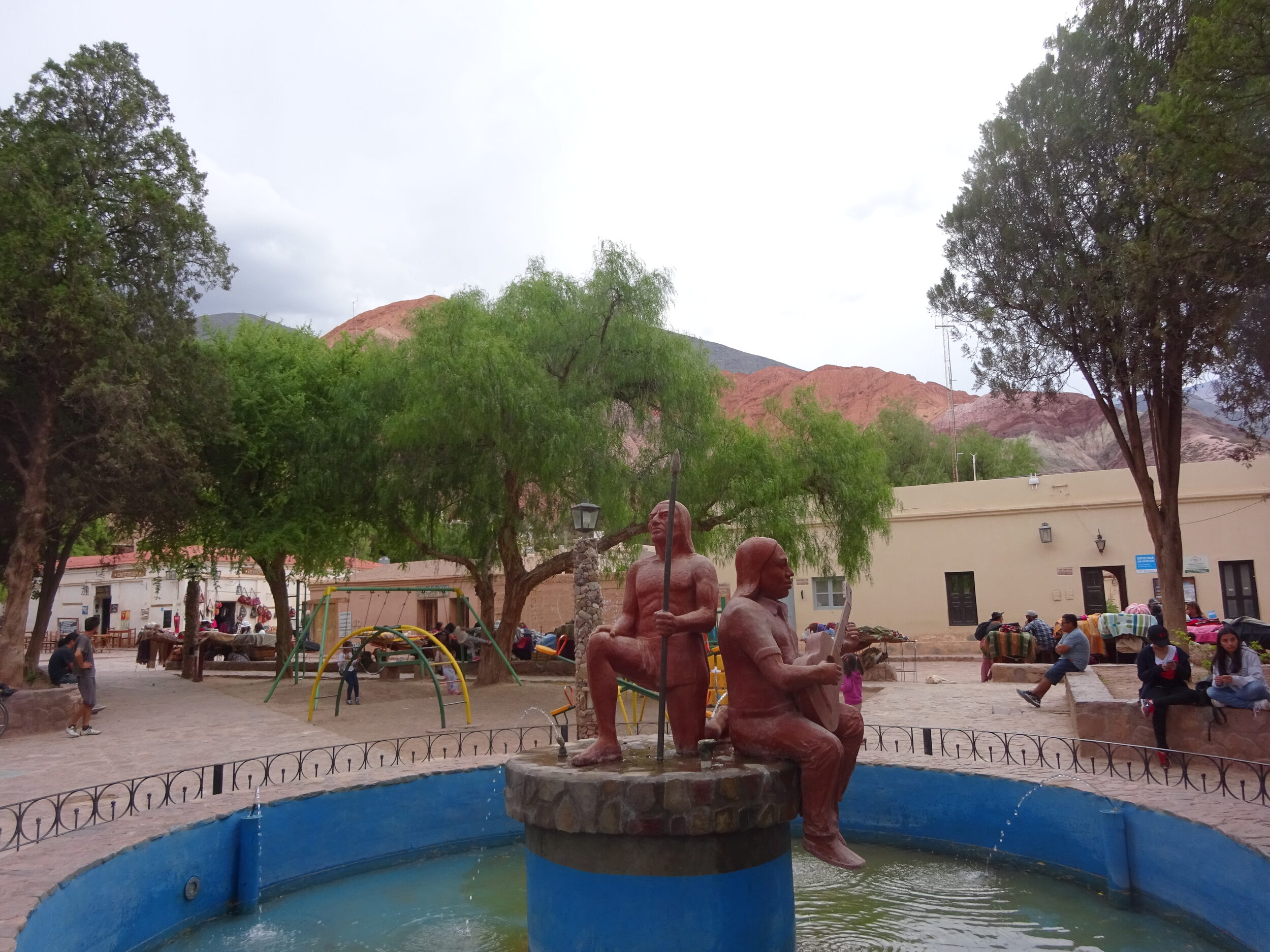
The village of Purmamarca is 2 1/2 hours north of Salta.
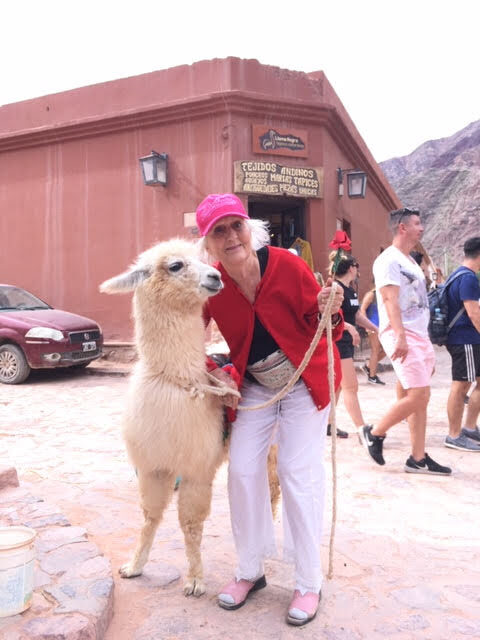
It's mostly a tourist stop, but worth visiting. Sharon
got to pet a llama.
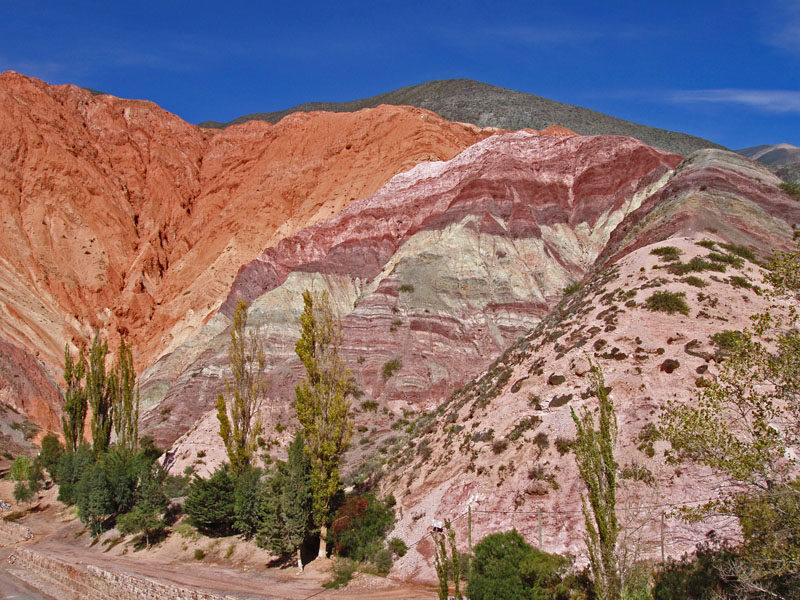
For the famous Seven Color Hill, I resorted to a
stock photo because mine were so inadequate.
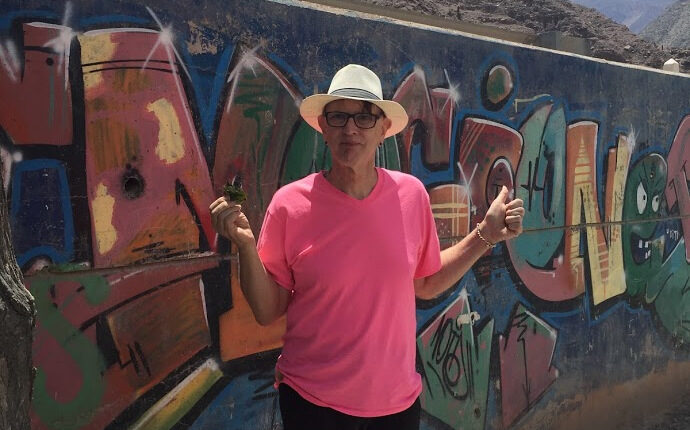
This is me with a wad of coca leaves. Last
time I came through here, Gautam disuaded me from trying
them, and I've regretted it ever since. I chewed some.
The world seemed just a bit brighter and I felt jittery.
Then I chewed more and more, and that was all I got. Not
ready to plow a hot uphill field all afternoon. You must
have to chew them continually to get the full effect.
Cristobal said he'd brought coca leaves into the US
with no problem. The web says "illegal but
tolerated". I didn't bring any home.
The last pic is an alarming collection of herbal remedies found in a
general store.

Pucara de
Tilcara
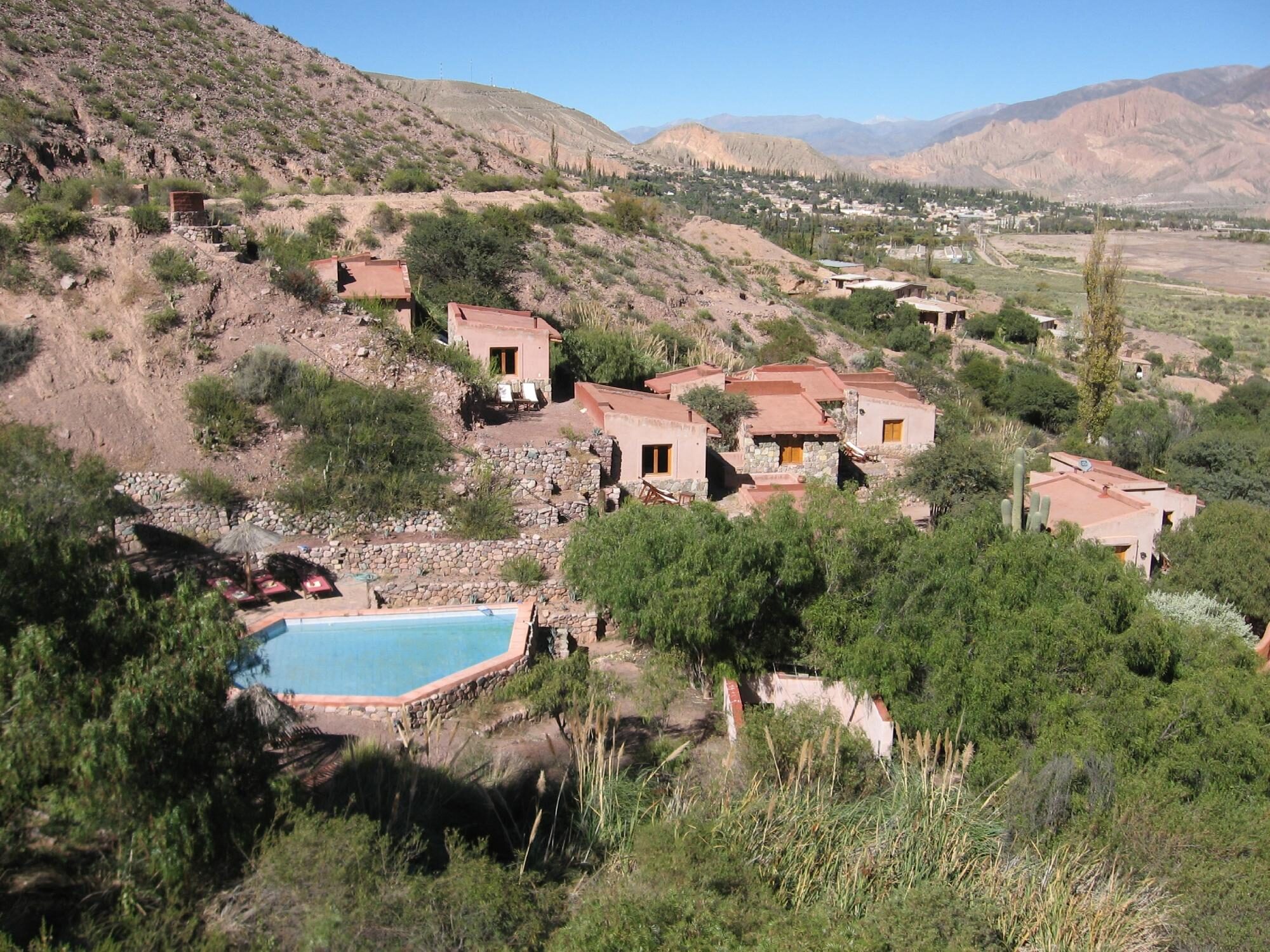
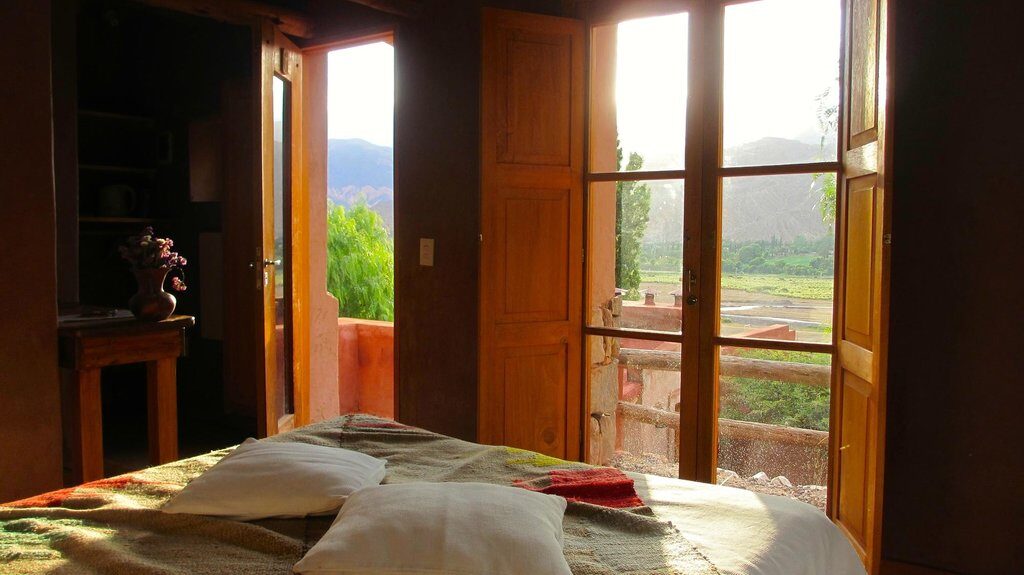
In Tilcara, we stayed in quaint
woodsy cottages laid out on a (very) steep hill. Good way
to get your heart rate up. Something they don't tell
you in the ads: The road up there is a mile of dirt,
rocks and ruts. In rain, it'd be unpassable without a
Jeep. Wonder if anyone's ever gotten stranded.
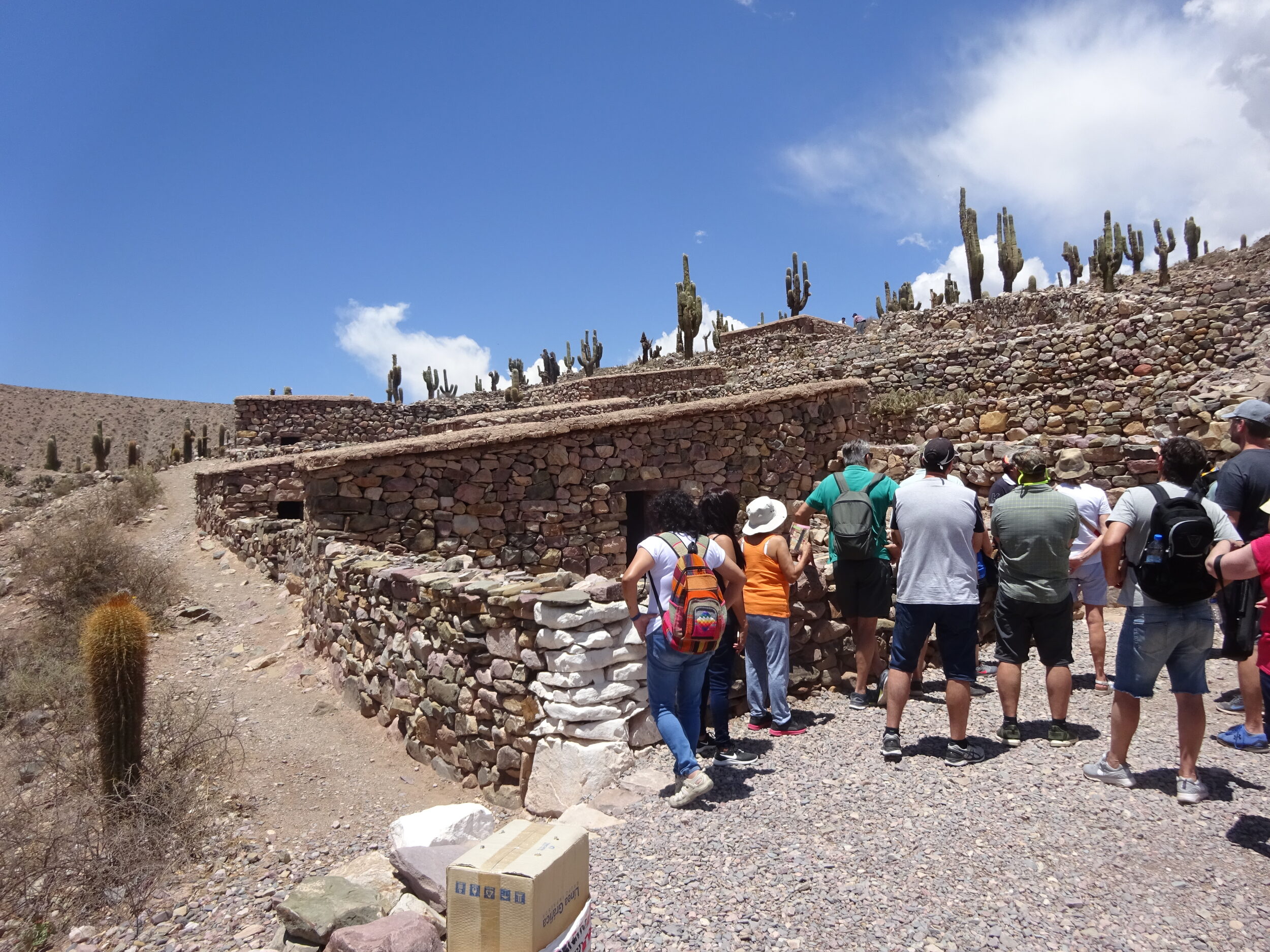
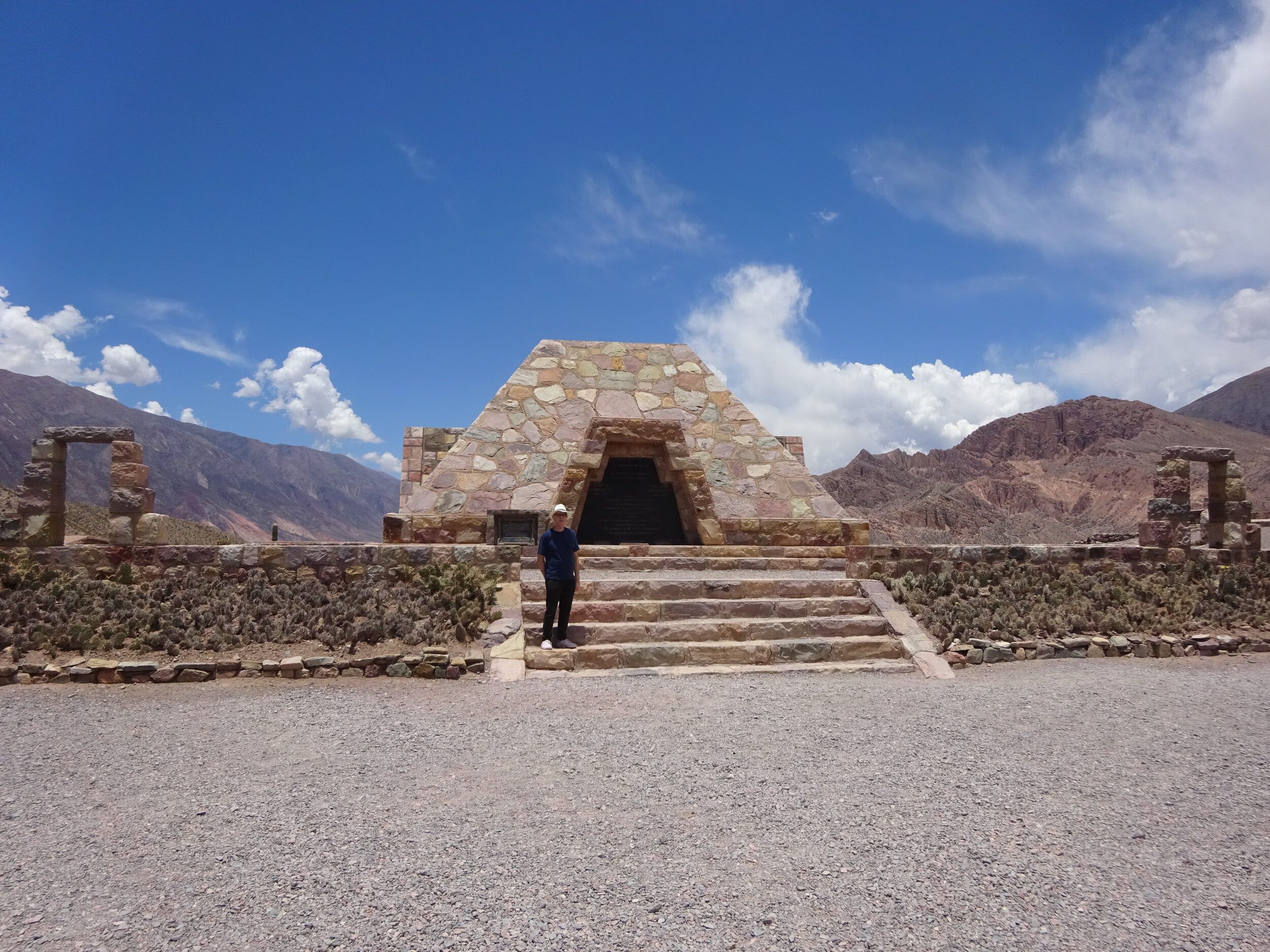
Traces of human habitation go back 10,000 years. The Pucara
was a fort created in the 12th century by the Omaguaca tribe as a military
and administrative center. It covered 51 acres and housed
2,000 people living in square stone buildings with low doors and no windows.
Pucara is Quechua for "fortification". The Omaguacas were conquered by the Incas, then the
Spanish, who used it as a transit point for the silver
mines of Potosi. Eventually, the site was abandoned and
looted. The partial reconstruction was done in the
1950s.
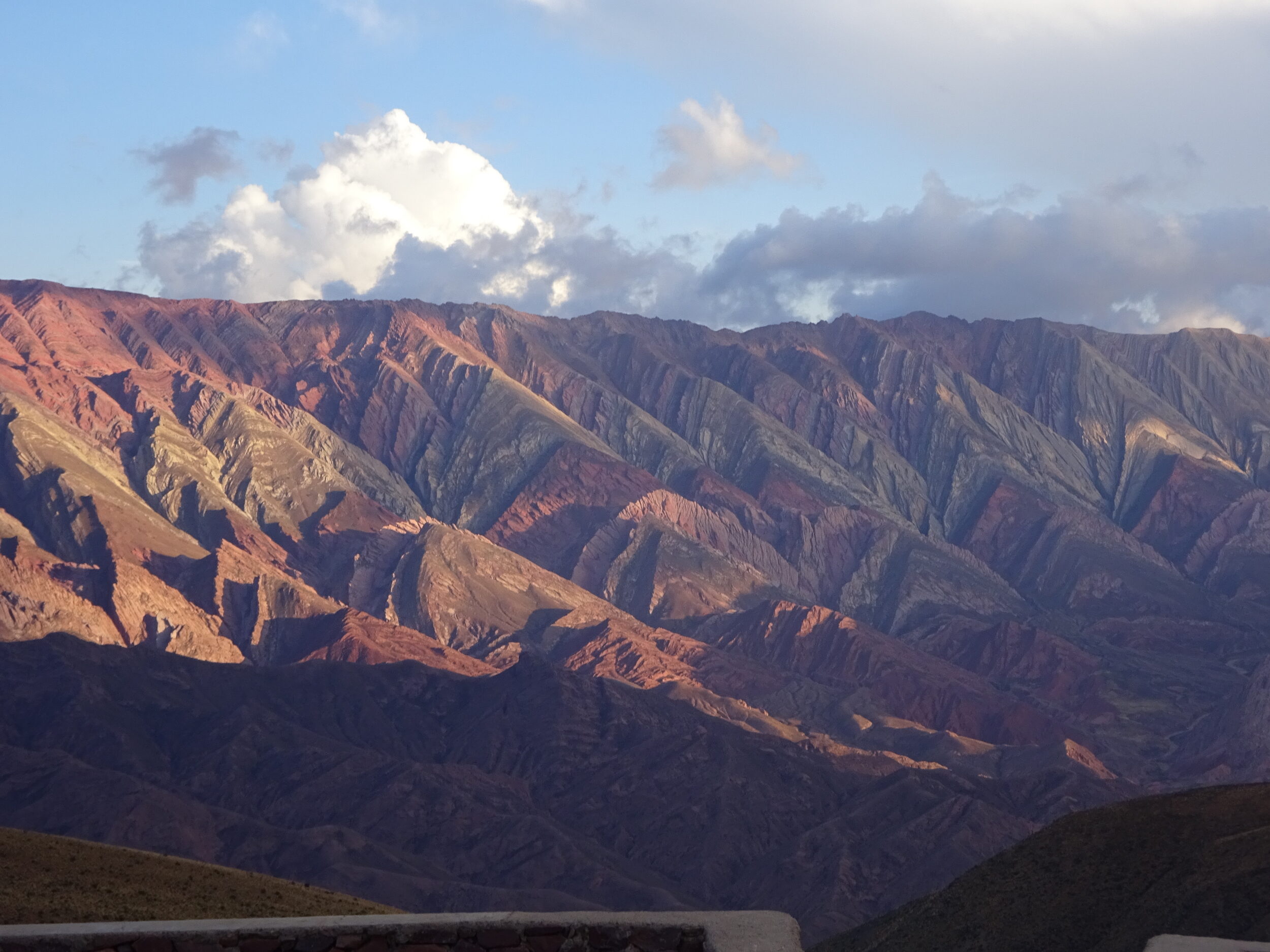
Gaurdian of the Mountain
Sharon was tired, so Cristobal
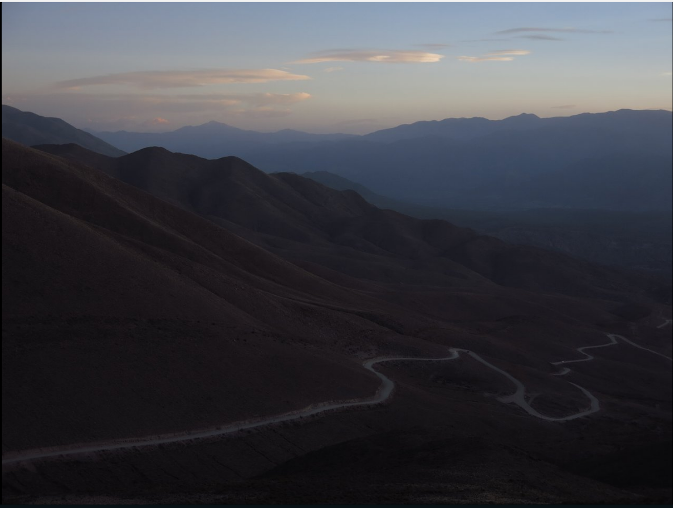
and I did the hour-long drive to Cerro Hornocal. It took an
hour to get there, but then we encountered the endless road
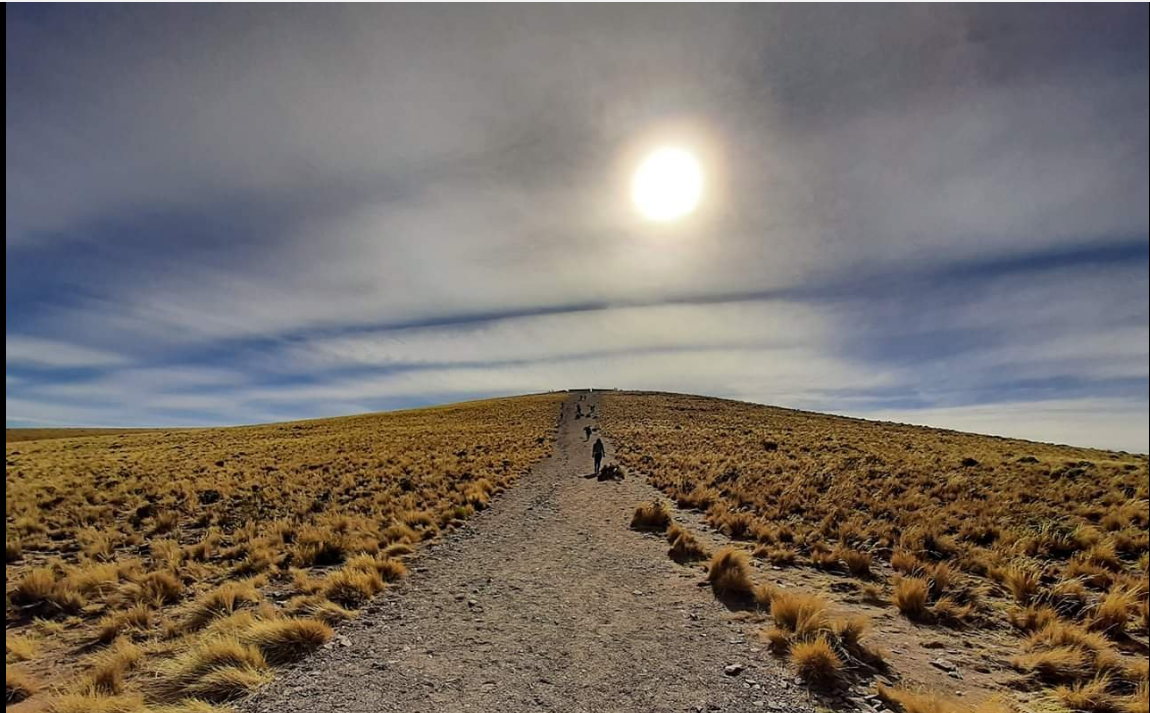
to the top*. We arrived minutes before sunset. We parked
and walked up to the top of a plateau.
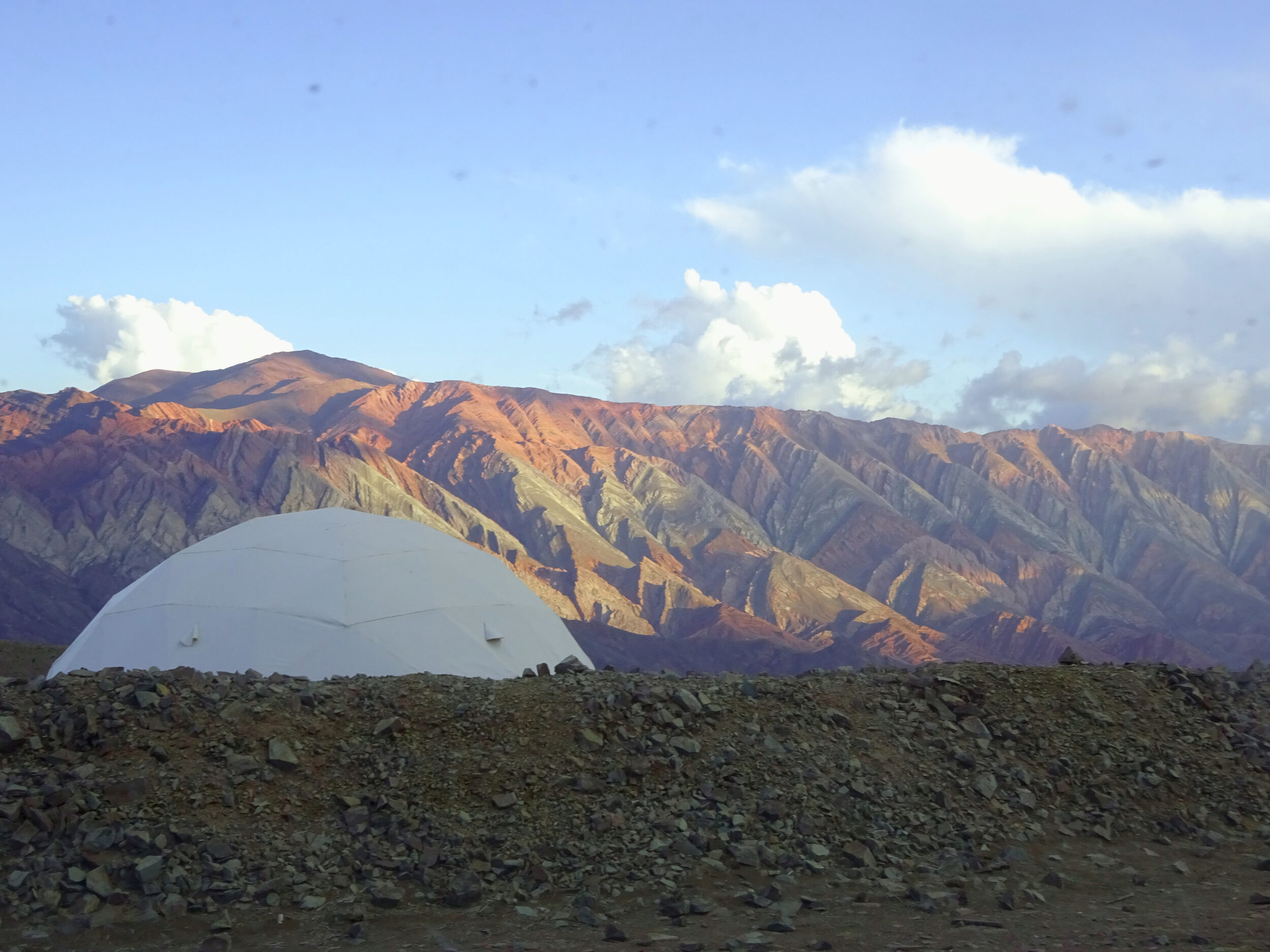
On the way in, we passed under an arch. An Indian woman
stood there. I asked her about the geodesic dome. I thought
it was a science experiment. It was a lot more mundane than
that. It stored snacks that she sold during the day.
The woman told us the plateau was closed for the evening.
But Cristobal told her we'd be just a few minutes and
drove on. And just a few minutes it was--it was freezing at
that altitude!
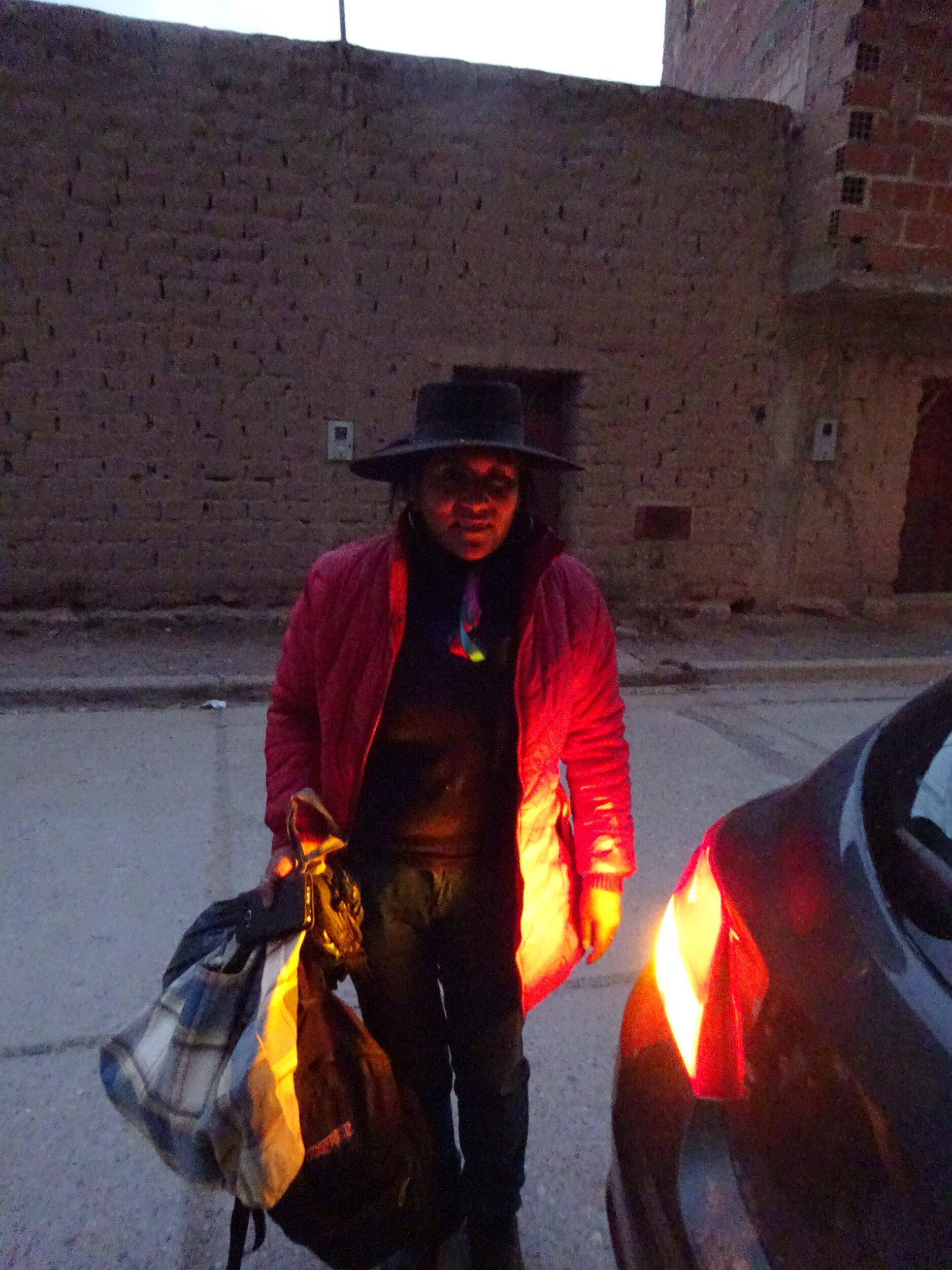
On the way down, she asked for a ride back to her village.
I wondered she would have done if we hadn't been
there--the last ones on the mountain. But she said
she'd never been stuck.
I decided that she was the legendary guardian of the
mountain, whom people didn't believe actually existed.
Her presence ensured that no one would be killed-- there
were signs warning about tumbling rocks, wild animals, and
altitude sickness. In the morning, she would turn into an
eagle and fly back up.
I decided she was the legendary Guardian of the Mountain, whom no one
believed to actually exist. Casting spells, she protects visitors from
the proclaimed hazards on the mountain: falling bounders, wild animals and altitude sickness.
She wouldn't agree to a picture until I had Cristobal
tell her all that. Then she decided that one
picture--just one (as if that made any difference). As soon as I snapped it,
she ran.
Then came the eye opener. She didn't want it posted on
Facebook because other villagers might see it and she'd
get in trouble. You can't see much of the village in
the picture, but it was all like that--a few square blocks
of decrepit-looking lowrise brick houses.
Does Not Translate Well
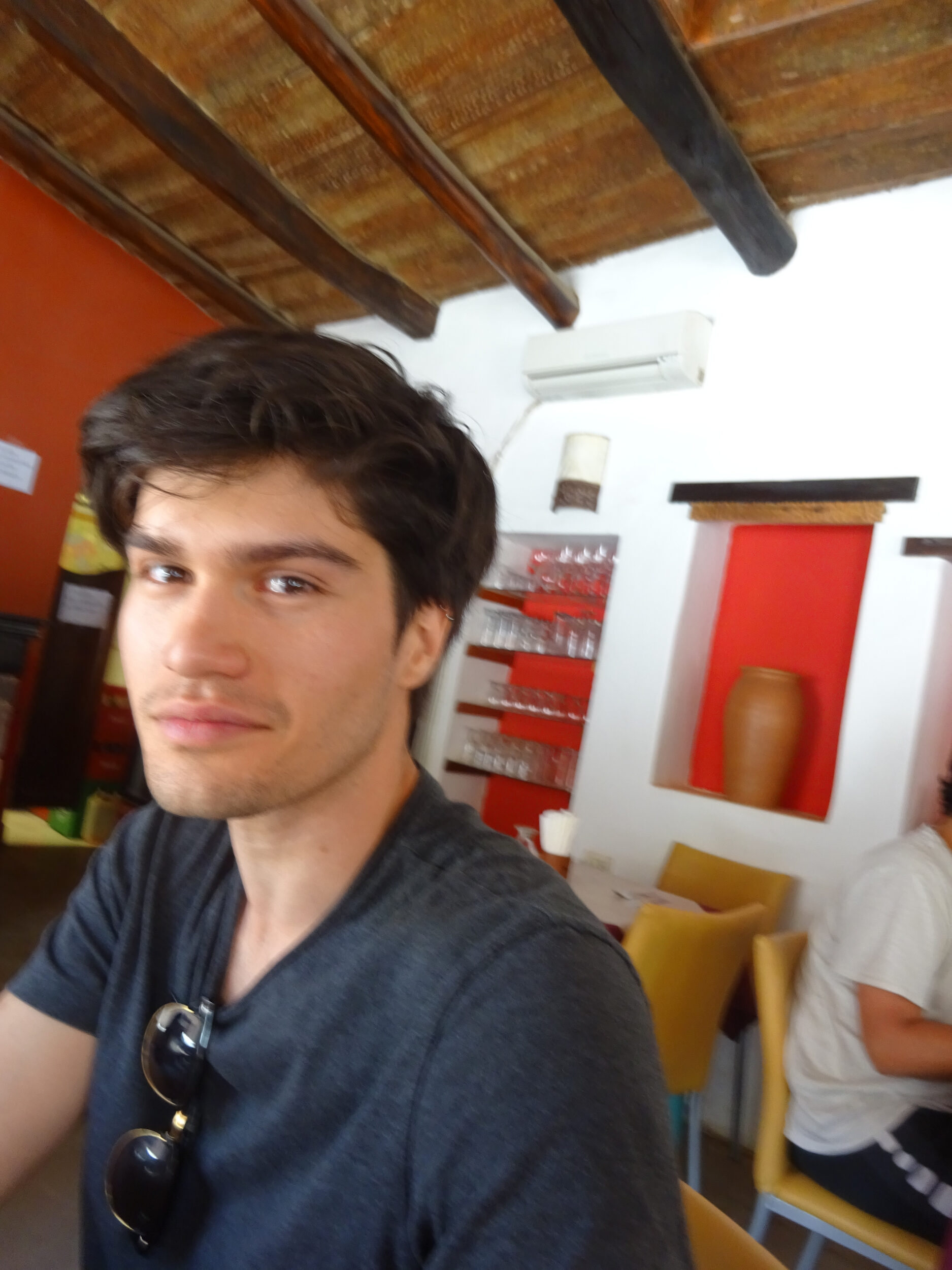
In the last pic, the camera decided on its own to give me the Eminem treatment. Perhaps it was the camera's hint, but I'm not sure if I like it or not.